
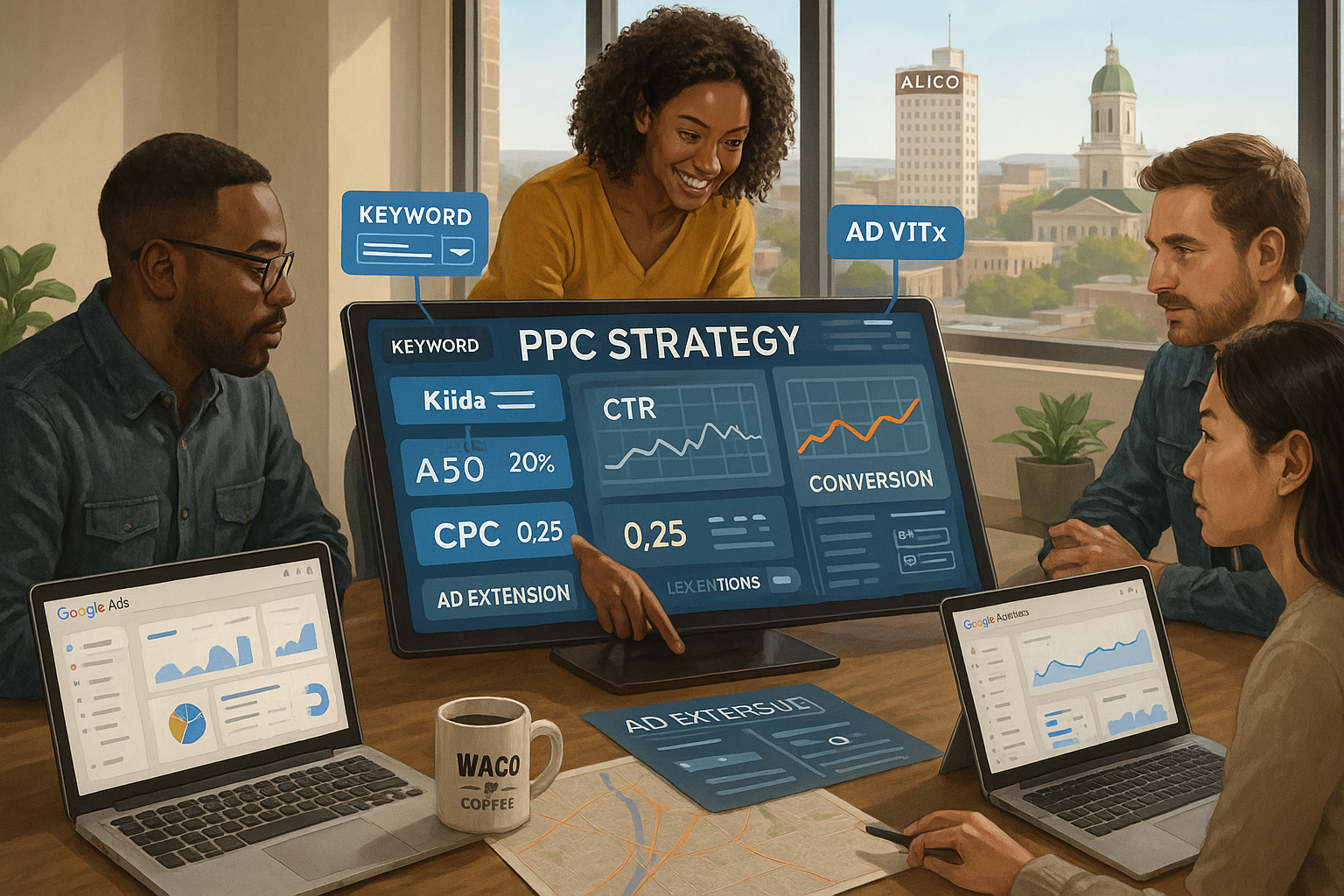
Decoding PPC Advertising: What Every Waco TX Business Should Know
We have seen firsthand how ppc advertising can transform a business’s visibility, especially here in Waco TX where competition is growing within local markets. PPC, or pay-per-click advertising, offers a dynamic way to attract targeted visitors who are ready to engage with your products or services. Unlike traditional advertising, PPC allows us to pay only when someone clicks on our ads, ensuring efficiency and measurable results. But unlocking the true potential of ppc advertising requires more than just launching a campaign—it demands a strategic approach.
In Waco TX, with its unique local culture and economic landscape, we have tailored our strategies to make every advertising dollar count. This deep dive will help you understand the core components of PPC advertising, how to optimize your campaigns, and ways to measure success effectively.
Understanding the Foundations of PPC Advertising
Before launching into the tactical side, it’s crucial we grasp how PPC advertising functions at its core. Essentially, PPC ads appear on platforms like Google Ads or Bing Ads, where businesses bid on keywords related to their products or services. When a user enters one of these keywords into a search engine, the ad can appear prominently either in the search results or on relevant websites.
The Mechanics of PPC
We explain PPC to our clients by breaking it down like this:
– Keyword Bidding: Advertisers choose keywords and assign a maximum bid amount for clicks.
– Ad Auction: Search engines automatically run auctions to decide which ads appear, factoring in bid and ad quality.
– Cost Per Click (CPC): You pay for each click your ad receives, not impressions.
– Quality Score: Google scores ads based on relevance and user experience, influencing where your ad shows and CPC.
In Waco TX’s competitive business environment, understanding these mechanics lets us plan campaigns that balance cost with visibility, preventing wasted budget on irrelevant traffic.
Choosing the Right Keywords
The selection of keywords is the backbone of any PPC advertising campaign. We emphasize choosing keywords that reflect exactly what potential customers in Waco TX are searching for. Tools like Google Keyword Planner provide data on search volume and competition, helping us target terms that offer the best ROI.
Consider this: A local coffee shop in Waco TX might target not only “coffee” but “best coffee shop near Baylor University” to capture local student traffic. Long-tail keywords like this often have lower competition and higher conversion rates, an insight we leverage for maximum effect.
Crafting Compelling Ads That Convert
Having keywords alone won’t guarantee success. The advertising copy and design must draw attention and motivate action. We have found that focusing on relevance, clarity, and benefits in the ad copy delivers the strongest returns.
Writing Ads That Speak Directly to Waco TX Customers
Our approach involves:
– Incorporating local landmarks or language nuances to increase resonance.
– Highlighting unique selling points like “Free Parking in Downtown Waco” or “Locally Owned Since 1995.”
– Including clear calls to action such as “Order Online Now” or “Visit Us Today.”
By personalizing ads with local context, engagement tends to rise because the message feels tailored rather than generic.
Utilizing Ad Extensions to Enhance Visibility
Ad extensions let us add extra information to PPC ads, improving click-through rates (CTR). Examples include:
– Location Extensions: Show your address prominently, helping drive foot traffic in Waco TX.
– Call Extensions: Allow users to call directly from the ad on mobile devices.
– Sitelink Extensions: Promote specific pages like “Menu,” “Special Offers,” or “Contact Us.”
These features increase the ad’s footprint and provide more reasons for users to click.
Optimizing PPC Campaigns for Better Results
Launching a PPC campaign is only the first step. Continuous optimization is where real success is cultivated. We monitor campaigns daily to refine bidding, keywords, and ad performance.
Analyzing Performance Metrics
We focus on key performance indicators (KPIs) such as:
– Click-Through Rate (CTR): Percentage of impressions that led to clicks, indicating ad relevance.
– Cost Per Click (CPC): How much we pay on average for a click, useful for budgeting.
– Conversion Rate: How many clicks translate into sales, sign-ups, or other valuable actions.
– Quality Score: Helps reduce costs and improve ad rank over time.
In Waco TX, understanding these metrics helps us stay competitive and profitable.
Refining Target Audience and Ad Scheduling
Targeting settings let us hone in on the ideal audience geographically and demographically. For example:
– Targeting by Location: We can focus strictly on Waco TX or surrounding areas, cutting out irrelevant traffic.
– Device Targeting: Emphasizing mobile users who represent a significant portion of local search traffic.
– Ad Scheduling: Running ads during peak business hours ensures we reach customers when they are most likely to convert.
These adjustments drive the campaigns toward higher engagement and profitability.
Measuring Success and Adapting Your Strategy Over Time
PPC advertising is dynamic, and staying ahead requires constant evaluation and adaptation. We have developed a process to regularly review campaign data and adjust strategy accordingly.
Using Analytics Tools Effectively
Our team leverages tools like Google Analytics and Google Ads reports to get a full picture of user behavior. By linking PPC data with website activity, we track what happens after each click.
For example, we can identify if users explore the site, make purchases, or abandon in the checkout process. This insight informs changes to landing pages and ad messaging.
Iterating Based on Data
Effective PPC is an ongoing conversation with your audience. We encourage A/B testing different ad copies, landing pages, and keyword groups to identify what resonates best with Waco TX consumers. This data-driven approach minimizes guesswork and maximizes campaign ROI.






Leave A Comment